
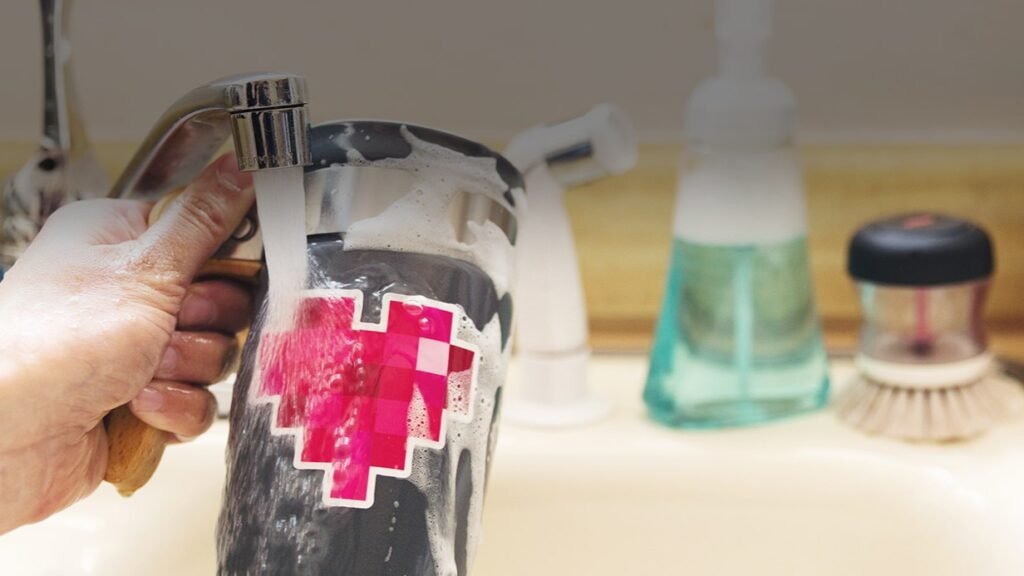
Waterproof stickers and labels for water bottles sound simple until you actually use them. A bottle gets tossed into bags, covered in condensation, bumped around at the gym, and washed over and over. So the real question is not just whether a sticker looks good on day one. It is whether it still looks good after a month of actual use. In my opinion, that is where most bad sticker choices get exposed fast.
A lot of people buy the first thing labeled “waterproof” and hope for the best. That usually ends with peeling corners, cloudy print, or labels that look tired after a few trips through daily life. If you want waterproof stickers and labels for water bottles that hold up, you need to think about material, adhesive, finish, and how the label will sit on a curved surface.
What “Waterproof” Really Means Here
For water bottles, waterproof has to mean more than “won’t fall apart if it gets splashed once.” It needs to handle moisture, rubbing, repeated handling, and a surface that may stay cold and sweaty for hours. That is why the best options usually use film-based materials instead of basic paper.
Paper labels can work for dry indoor packaging, but they are not my first pick for anything that lives in a fridge, cooler, lunch bag, or cup holder. A water bottle is a high-contact item. People touch it constantly. It knocks against keys, desks, and backpacks. So even if the front print survives, the edges can still fail if the adhesive or face stock is wrong.
That is also why waterproof performance is not just about the face material. The finish matters. The adhesive matters. And the shape matters more than people think. A label that wraps around a curved bottle has different stress points than a die-cut sticker on a flat tumbler.
Best Materials for Water Bottle Use
If I were choosing waterproof stickers and labels for water bottles, I would start with vinyl, film, or BOPP-style materials. Those are the workhorses. They handle moisture better than paper, resist tearing better, and generally keep their print quality longer when the bottle gets real-world abuse.
Vinyl is a strong choice for individual stickers, especially for branded bottles, giveaway decals, laptop-style graphics, and personal use. It feels more durable, and it usually has the outdoor-ready reputation people are looking for.
BOPP and other film labels are especially useful for bottle labels and product packaging. They flex better on curved containers and do a better job in wet or condensation-heavy settings. If the bottle is going into coolers, shipping boxes, or refrigerated storage, that flexibility matters.
Clear film can also work well when you want a clean “printed on the bottle” look. But clear materials are less forgiving if the artwork has low contrast or if the bottle surface is textured. The premium look is great. The readability still has to come first.
Finish and Adhesive Matter More Than People Expect
A lot of label failures are really finish failures or adhesive failures. The print itself might be fine, but the top surface scuffs or the edges start to lift because the adhesive was wrong for the job.
For water bottles, I usually think in three buckets.
First, permanent adhesive is the safest pick when the label needs to stay put. If the goal is long-term branding, product labeling, or a bottle that gets used every day, permanent adhesive makes the most sense.
Second, removable adhesive is better when the label is temporary, seasonal, or meant to come off cleanly later. That is useful, but it is not what most people want for regular bottle use.
Third, laminated or protected finishes help a lot. Matte looks clean and modern. Gloss gives more pop. Either can work, but the real win is surface protection. A bare print can look rough faster than people expect.
If the bottle is squeezable or has a strong curve, a stiff label can wrinkle even if the material is technically waterproof. That is why conformability matters. Flexible film labels tend to sit better on bottles than stiffer options.
Common Mistakes That Ruin Good Designs
The biggest mistake is using paper because it is cheap and easy. Sometimes cheap is fine. This is usually not one of those times.
Another common mistake is choosing a label shape that fights the bottle. A wide rectangle wrapped around a narrow curve can look good on a screen and bad in real life. The more extreme the curve, the more you need the material and shape to cooperate.
Tiny text is another problem. Water bottles move. People glance at them. If the label has a product name, care note, flavor, or brand line, it needs to be readable fast. A fancy design that turns into a blur on a curved surface is not helping anyone.
And then there is surface prep. Even great waterproof stickers and labels for water bottles can fail if the bottle is dusty, oily, or wet when applied. A good material still needs a clean start.
Best Use Cases for Waterproof Stickers and Labels for Water Bottles
Not every bottle job is the same, so the “best” option depends on what the sticker or label is supposed to do.
For branded merchandise, vinyl stickers are hard to beat. They feel durable, look premium, and give people the kind of sticker they actually want to keep.
For bottled products, film or BOPP labels usually make more sense. They sit better on curves, handle moisture better, and feel more like real packaging.
For kids’ bottles, gym bottles, and outdoor use, I would lean toward materials built for rubbing, moisture, and repeated handling. This is not the place to get cute with fragile materials.
For event swag or short-run promotions, you can sometimes step down in durability if the bottle will not be used for long. But if you expect it to last, build for that from the start.
Conclusion
Waterproof stickers and labels for water bottles are one of those things that seem easy until you use the wrong material once. Then you remember. Fast. If the bottle is going to face condensation, rubbing, curved surfaces, and daily handling, choose a film-based material, a solid adhesive, and a finish that protects the print. Keep the design readable, keep the shape realistic, and do not underestimate how rough daily use can be.
That gives you a better shot at a label or sticker that still looks good after the bottle stops being new.