
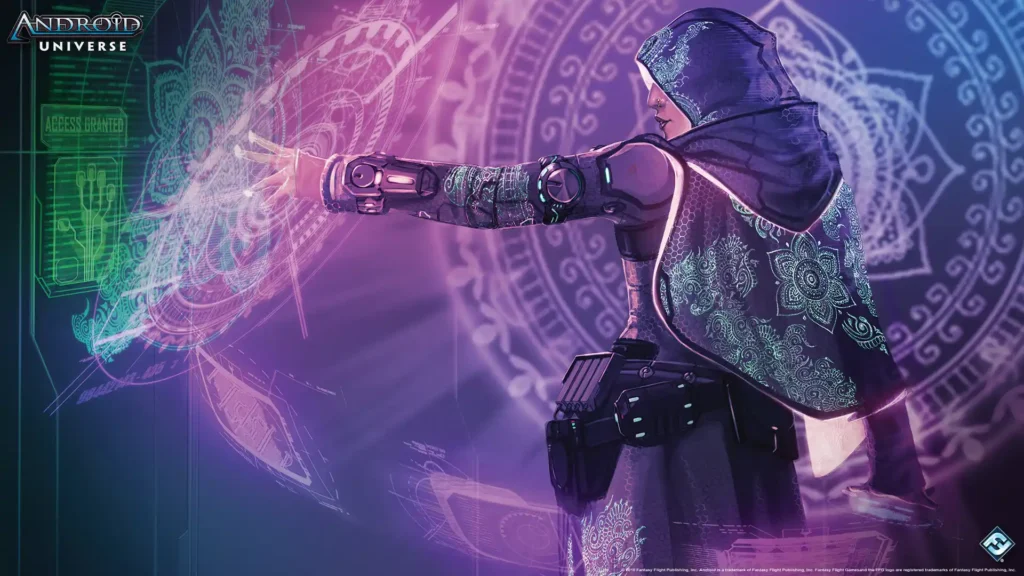
Android Netrunner LCG is one of those games people describe with a little too much intensity. Not because it’s complicated for the sake of it, but because it creates real stories. You can play a “normal” game where both sides trade small advantages. Or you can have a run that feels like a movie scene where everything is on the line and somebody’s bluff finally gets called.
If you’ve never touched it, here’s the clean version: it’s a two-player, asymmetric living card game set in a cyberpunk world. One player is the Corp, hiding agendas in servers behind layers of ICE. The other is the Runner, probing, building rig pieces, and deciding when to go loud. The game is about timing, information, and guts.
And yes, there’s a twist in 2025: the original publisher stopped producing it years ago, but the game is still alive, still supported, and still evolving.
What is Android Netrunner LCG?
Android Netrunner LCG (often just called “Netrunner” now) is built around asymmetry. The Corp and the Runner do not play the same game.
The Corp is trying to score agendas. That means installing cards into servers, protecting them, and advancing the right things at the right time. The Runner is trying to steal those agendas by making runs, breaking ICE, and forcing the Corp to spend resources defending everything.
This structure is why the game holds up. You’re not just trading damage spells or counting points. You’re managing hidden information. You’re selling a lie, or sniffing one out. You’re deciding whether you can afford to check that remote server right now… or whether you’re walking into a trap.
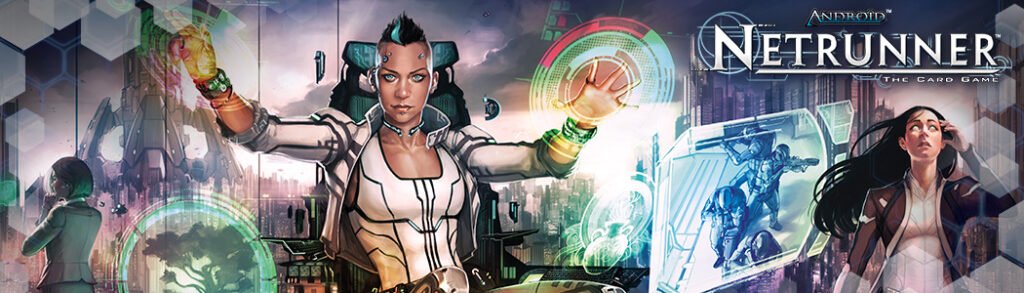
How the game plays (Corp vs Runner basics)
Both sides take turns, and turns are paced by a simple action system (often called “clicks” in the community). Most turns are a mix of:
- Building economy (credits)
- Improving your board position (installing hardware, programs, upgrades, ICE)
- Pressuring the opponent (runs, traces, tags, scoring windows)
The Corp creates servers. There’s central servers (like HQ and R&D) and remotes the Corp builds on the fly. The Runner attacks those servers by making runs. Runs are the heart of the game: you approach ICE, decide whether to continue, try to break it, and if you get through, you access cards and see what’s really there.
A lot of games come down to a single question repeated in different forms: “Is now the moment?”
A quick history (and why people think it “ended”)
Netrunner started in the 1990s as a Richard Garfield design. It later returned in 2012 as Android: Netrunner under Fantasy Flight Games’ Living Card Game model. That era built the game’s modern identity: factions, cycles, big expansions, and a serious competitive scene.
Then the license ended. Fantasy Flight announced it would stop selling Android: Netrunner products as of October 22, 2018, and that the final expansion would be Reign and Reverie. Organized Play under Fantasy Flight also ended around that time.
That sounds like a funeral notice. But it wasn’t the end of people playing.
Current status in 2025: what’s actually happening now
Here’s the current reality: the game is being actively supported and expanded by Null Signal Games (NSG), a nonprofit, volunteer-run organization that designs new cards, maintains ban lists, and supports organized play.
That matters because it answers the two questions new players always ask:
- “Is this game dead?”
No. - “Is it stable enough to invest time into?”
Yes, because the rules, formats, and product roadmap are being managed like a real, ongoing game.
The modern “core” and the current set lineup
NSG has put real effort into making the on-ramp smoother than the old Fantasy Flight era. If you’re coming in now, you’ll hear these names a lot:
- System Gateway (a beginner-friendly entry point and evergreen base)
- Elevation (a newer core-style expansion meant to pair with Gateway)
On top of that, NSG’s major releases are grouped into cycles, such as:
- Ashes Cycle (Downfall, Uprising)
- Borealis Cycle (Midnight Sun, Parhelion)
- Liberation Cycle (The Automata Initiative, Rebellion Without Rehearsal)
If you’re a returning player, one big headline from 2025 is that rotation and card pool cleanup have pushed Standard into a more modern state. In plain terms: you’re not expected to chase every old box from a decade ago to play “real” Netrunner.
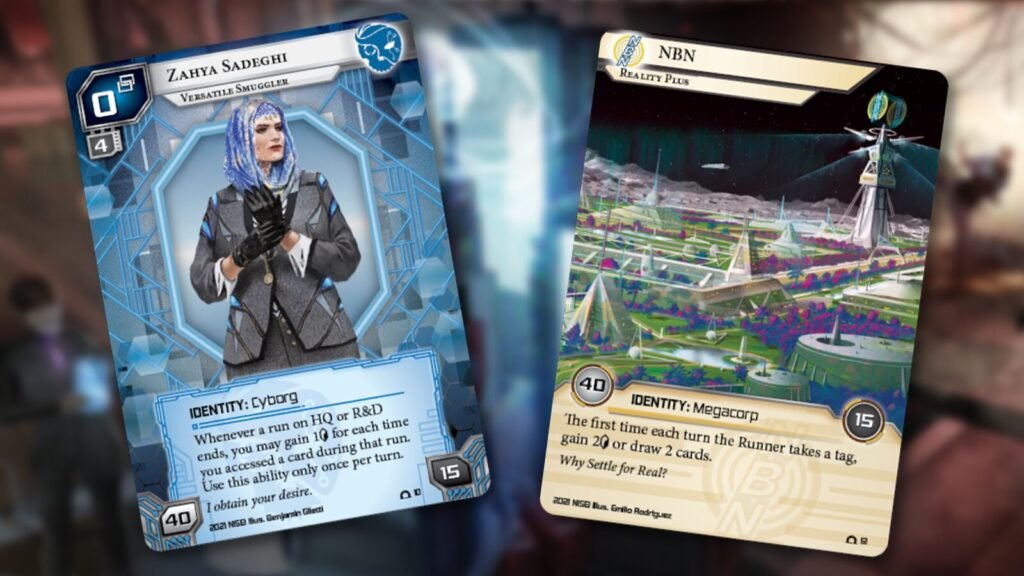
Formats you’ll actually hear about: Standard and Startup
NSG supports multiple formats, but two matter most for most people:
Startup is the smaller, curated format. It’s designed to be approachable and cheaper to enter.
Standard is the main competitive format. Bigger card pool, deeper deckbuilding, and it’s what most major events are built around.
NSG also updates balance through ban lists and restrictions. So the meta isn’t just “whatever the loudest deck is.” It gets tuned.
What’s coming next: Vantage Point
NSG has already announced the next set, Vantage Point, targeted for Q1 2026. The important detail is how it affects formats: it is not expected to trigger a Standard rotation, but it will change what’s in Startup by rotating out the Liberation cycle when Vantage Point releases.
So if you’re reading this in late 2025, the game isn’t in limbo. It’s mid-season.
Printing and product availability (a practical note)
One quiet challenge for community-supported games is physical availability. NSG has been working on that too. In December 2025, they described new printing arrangements aimed at improving restocks and consistency across regions.
If you like playing with real cards, this is a meaningful sign: they’re treating production like an ongoing responsibility, not a one-off.
Organized play, Worlds, and the online scene
The community is not just “still around.” It’s active in the way that matters: events, coverage, and repeatable structures.
NSG runs an organized play ecosystem that includes major tournaments and a World Championship. For example, the 2025 Netrunner World Championship took place in Edinburgh, Scotland (October 17 to 19), and NSG later published recap coverage with attendance and event details.
Online, the two big pillars are:
- Jinteki.net for playing games in a browser
- NetrunnerDB for deckbuilding, card browsing, and sharing lists
And in 2025, NSG also highlighted tooling improvements around “Print & Play” support on NetrunnerDB, which fits how a lot of modern players actually engage: brew online, test online, then bring it to the table.
Getting started in 2025: a sane approach
If you’re brand new, the best move is to treat this like learning chess with fewer pieces first. Start with the modern core experience, play a bunch, then expand.
If you’re also planning to print anything (proxies, tokens, player aids, dividers), it’s worth remembering that print has its own rules. Color, bleed, and resolution can wreck a “perfect” file. I’d rather you avoid the classic pain. This Printiverse post covers the common mistakes: Avoiding Pitfalls When Moving Designs Between Paper and Pixels.
And if you’re the kind of tabletop person who’s also into Magic, the culture overlap is real. The difference is that Netrunner’s community tends to be smaller but very committed. This is a fun side read on franchise overload, if you want it: Crossover Fatigue Meets Franchise Lessons: What Magic and Disney Are Getting Wrong About “More”.
Why people still care (and why it’s not just nostalgia)
A lot of games survive because people have sunk costs. Collections, habits, friends. Netrunner survives for a cleaner reason: the play experience is still sharp.
- The asymmetry stays interesting even after hundreds of games.
- The bluffing is real because agendas are real.
- The pacing is tense because runs create clean turning points.
- Deckbuilding is expressive without being “solve the spreadsheet.”
And in 2025, the biggest reason the game feels healthy is simple: it has stewardship. Formats, rules updates, organized play, printing plans, and a release roadmap. That is what turns a “dead” game into a living one.
Conclusion
Android Netrunner LCG had an official ending in 2018, but it didn’t actually stop. In 2025, it’s a community-supported game with real structure: modern core products, supported formats like Standard and Startup, active balance updates, major tournaments, and an upcoming set (Vantage Point) already on the horizon.
If you want a cyberpunk card game that rewards good timing and nerve, you could do a lot worse. Just be warned: after a few games, most people start talking about “one more run” like it’s a life choice.